
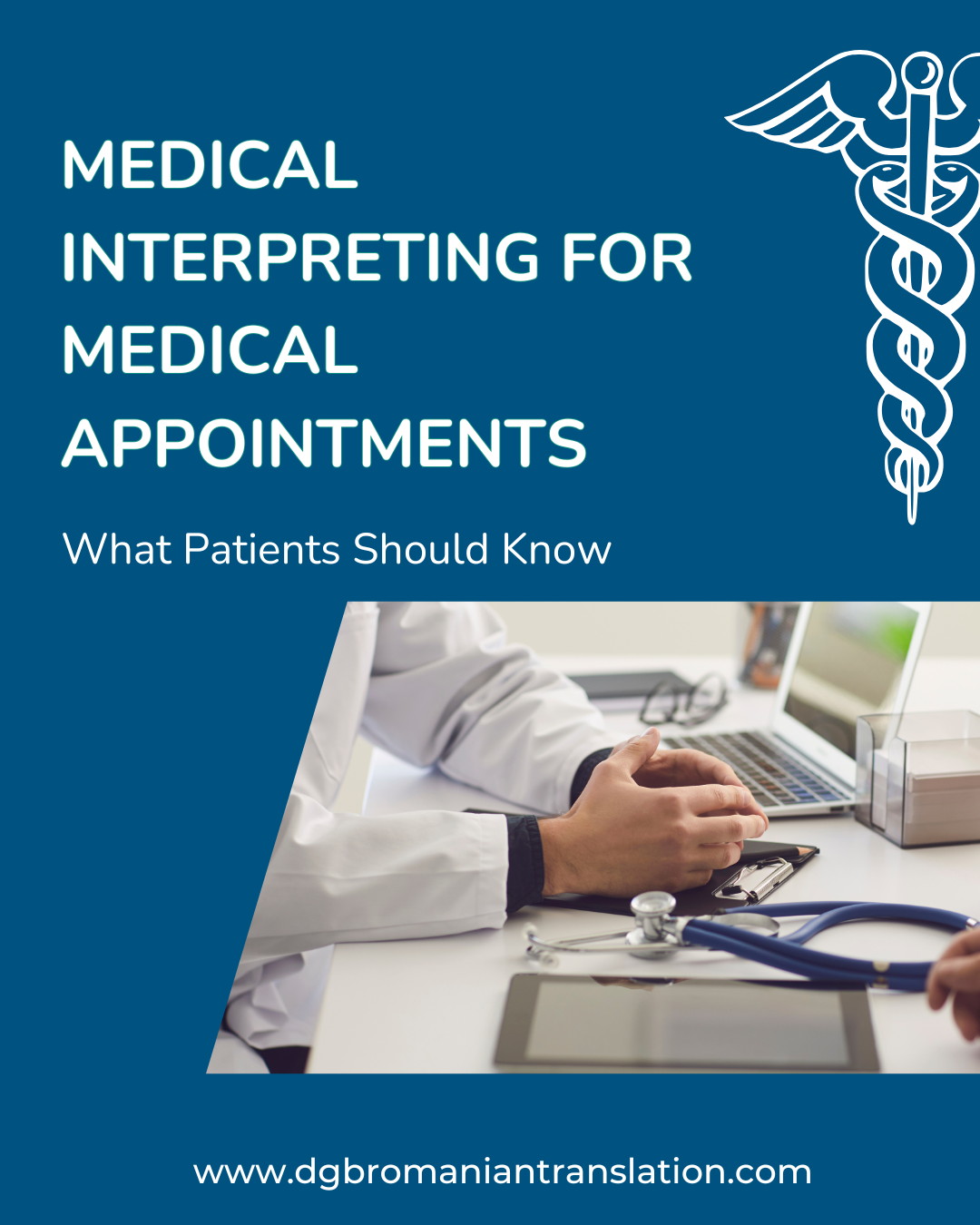
Medical Interpreting for Medical Appointments
Introduction
Communicating clearly with a doctor or healthcare professional is essential. Patients need to understand their symptoms, diagnosis, treatment options and medical advice, while healthcare professionals need accurate information about the patient's health and medical history.
For people who are not confident communicating in English, a medical interpreter can play an important role during a medical appointment. Professional interpreting allows patients and healthcare professionals to communicate accurately, while helping patients participate more fully in decisions about their care.
It is important, however, to understand that medical interpreting is different from medical translation. Although both involve specialised language skills, they are used in different situations.
In this guide, we explain what patients should know about medical interpreting, when an interpreter may be needed, how confidentiality and accuracy are handled, and what you can do to prepare for your appointment.
1. Medical Interpreting vs Medical Translation: What Is the Difference?
The terms interpreting and translation are sometimes used interchangeably, but they describe two different professional services.
Interpreting involves transferring spoken communication from one language into another, usually in real time. A medical interpreter may interpret a conversation between a patient and a GP, consultant, nurse or other healthcare professional.
Translation, on the other hand, involves converting written information from one language into another. For example, a certified translator may translate medical reports, hospital discharge summaries, specialist letters, prescriptions and medication information, laboratory results, medical histories, insurance or medical documentation. Check our blog post about this topic here.
For example, if you have a consultation with a specialist who speaks English while you communicate primarily in Romanian, you may need a medical interpreter during the appointment. If you subsequently need your hospital report translated into Romanian, you will need a medical translation service.
Both services require more than general language knowledge. Medical terminology, anatomy, diagnoses, treatments and medication names can be highly specialised, making professional expertise particularly important.
2. When Might You Need a Medical Interpreter?
Patients may need medical interpreting services whenever language differences make it difficult to communicate accurately with a healthcare professional.
This can apply to many types of appointments, including:
GP appointments
You may need an interpreter when discussing symptoms, previous medical conditions, medication, test results or referrals.
A professional interpreter can help ensure that the patient understands the GP's questions and that the information provided by the patient is accurately communicated.
Specialist consultations
Specialist appointments can involve complex terminology and detailed discussions about diagnosis and treatment. Examples include consultations with cardiologists, oncologists, neurologists, surgeons and other specialists.
Hospital appointments
Interpreting may be needed for outpatient consultations, pre-operative appointments, follow-up consultations and other hospital-based services.
Treatment and follow-up appointments
Patients undergoing ongoing treatment may need interpreting support over several appointments. Consistency can be particularly helpful because the interpreter becomes familiar with the terminology and context involved in the patient's care.
3. Why Accuracy Matters in Medical Interpreting
Accuracy is one of the most important aspects of medical interpreting.
In everyday conversation, a minor misunderstanding may be inconvenient. In a healthcare setting, however, misunderstanding information about symptoms, medication, allergies, diagnosis or treatment can have much more serious consequences.
A professional medical interpreter should communicate the meaning of what is said as accurately as possible without changing, omitting or adding information.
This includes interpreting medical terminology, symptoms and descriptions of pain, diagnoses, medication instructions, treatment options, questions and answers, medical history, follow-up instructions.
The interpreter's role is not to make medical decisions or give personal medical advice. Instead, they facilitate communication between the patient and healthcare professional.
For this reason, using a trained professional rather than relying on a friend or family member can be particularly important for complex or sensitive medical discussions.
4. Confidentiality and Privacy During Medical Interpreting
Medical appointments often involve highly sensitive information. Patients may discuss their medical history, diagnoses, medication, reproductive health, mental health, family history or other personal matters.
Confidentiality is therefore an essential consideration when choosing a professional medical interpreter.
In the UK, patients can expect their personal information to be treated as confidential by healthcare professionals. The General Medical Council's confidentiality guidance states that patients have a right to expect their personal information to be treated confidentially.
A professional interpreter working in a healthcare environment should understand the importance of confidentiality and professional conduct.
For particularly sensitive appointments, such as discussions about serious diagnoses or treatment options, professional interpreting can provide an additional level of reassurance and professionalism.
5. What Happens During a Medical Interpreting Appointment?
The exact format depends on the healthcare provider and the type of appointment, but the basic process is straightforward.
The healthcare professional speaks to the patient, and the interpreter communicates the information in the patient's preferred language. The patient can then respond in their preferred language, with the interpreter conveying the response back to the healthcare professional.
Ideally, the interpreter facilitates a direct conversation between the patient and healthcare professional rather than becoming the focus of the conversation.
Depending on the circumstances, interpreting may take place: face-to-face, by telephone or through video interpreting.
For longer or more complex consultations, additional time may be necessary. NHS England guidance recognises that appointments involving communication professionals can take longer because they involve a three-way conversation.
6. How Can You Prepare for an Appointment?
Preparing in advance can make a medical appointment much easier.
If you know that you will need interpreting for a medical appointment, consider the following steps.
Tell the healthcare provider in advance
Let your GP surgery, hospital or healthcare provider know which language you need and that you require interpreting support.
Giving sufficient notice can make it easier for the provider to arrange an appropriate interpreter.
Prepare your medical documents
Bring relevant medical reports, previous test results, prescriptions or other documents with you. If these documents are in another language, you may also need a medical translation before or after your appointment.
You can learn more about medical translation services by exploring our website.
Make a list of your questions
Before the appointment, write down the symptoms or concerns you want to discuss. A simple list can help you remember important questions.
Prepare information about medication
Make a note of the medication you currently take, including names and dosages where possible. Also make sure the healthcare professional knows about any known allergies.
Don't be afraid to ask for clarification
If you do not understand something, ask the healthcare professional to explain it again. The interpreter can communicate your request and help facilitate the conversation.
Healthcare providers should identify and record communication needs and take appropriate steps to support effective communication.
7. Choosing Professional Medical Interpreting Services
Not every interpreter has the specialist knowledge required for healthcare settings.
When choosing healthcare interpreting services, consider whether the interpreter has relevant experience with medical terminology and healthcare communication.
You may also want to consider the experience with medical appointments, relevant language combination, professional qualifications, availability for face-to-face or remote interpreting and the most important thing, the experience with specialist medical terminology.
If you also require written documents to be translated, you may benefit from using a provider that offers both medical translation services and interpreting.
You can also explore our translation services if your documents involve legal or administrative matters, or our Romanian interpreting services if you require support specifically between Romanian and English.
Frequently Asked Questions
1. What is a medical interpreter?
A medical interpreter is a trained language professional who facilitates communication between patients and healthcare professionals when they do not share the same spoken language.
2. What is the difference between a medical interpreter and a medical translator?
A medical interpreter works with spoken communication, while a medical translator works with written documents. For example, an interpreter may assist during a GP appointment, while a translator may translate a hospital discharge summary.
3. Can medical interpreting be done remotely?
Yes. Depending on the healthcare provider and circumstances, interpreting may be provided face-to-face, by telephone or through video.
4. Is medical interpreting confidential?
Professional medical interpreting should be conducted with appropriate respect for patient confidentiality and professional standards. Healthcare professionals also have duties concerning the confidentiality of patient information.
5. Do I need an interpreter for a GP appointment if I speak some English?
If you are not confident that you can understand and communicate complex medical information in English, professional interpreting may be helpful. Medical appointments can involve specialised terminology that is difficult even for people who speak English well.
6. Can I have my medical documents translated as well?
Yes. If you need medical reports, hospital letters, test results or other written documents translated, you will need a certified medical translation.
Conclusion: Clear Communication Starts with the Right Support
Being able to communicate effectively with healthcare professionals is an important part of receiving and understanding medical care. For patients who are not fully comfortable communicating in English, a professional medical interpreter can help bridge the language gap during GP, specialist and hospital appointments.
Medical interpreting is different from translation, but both services require accuracy, specialist terminology and a strong understanding of confidentiality.
If you need medical interpreting or medical translation services in the UK, our experienced team can help you find the right language support for your circumstances.
Contact DGB Romanian Translation Services today to discuss your medical interpreting or translation requirements and find out how we can assist.
